Documentation for the support system
Domain description
The Domain Description page provides a comprehensive overview of the subject area for which the system is designed. Its purpose is to help users, analysts, and developers clearly understand the business context, operational environment, and key processes that the system supports.
This section describes:
1. The Purpose of the Domain
It explains why the system exists and the real-world problems it aims to solve.
Users gain insight into the goals and motivations behind the system, ensuring a shared understanding of its value and intended outcomes.
2. Core Concepts and Terminology
The page outlines the essential terms, definitions, and concepts specific to the domain.
This establishes a common vocabulary so that everyone uses the same language when discussing requirements, workflows, and features.
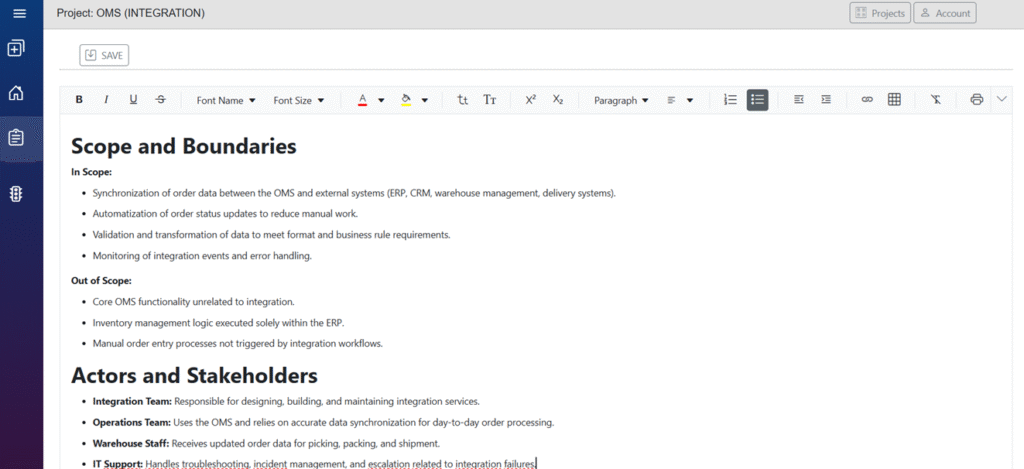
3. Scope and Boundaries
It identifies what is included within the domain as well as what falls outside of it.
This helps avoid misunderstandings and supports accurate decision-making during design, development, and operations.
4. Key Actors and Stakeholders
The description highlights the main user groups, teams, or roles that interact with the system.
Understanding these actors makes it easier to design user flows, permissions, and responsibilities.
5. Domain Processes and Workflows
It provides an overview of the fundamental business processes that the system supports.
This may include ticket handling, incident analysis, communication patterns, escalation steps, or SLA management—depending on the system’s focus.
6. System Context
The page explains how the system fits into the broader organizational environment, including connections with other tools, services, or departments.
Purpose of the Page
The Domain Description page ensures that anyone working with the system—whether a new user, an engineer, a manager, or a business analyst—can quickly understand the system’s context, objectives, and operational foundation.
It serves as a starting point for deeper documentation, system design, training, and ongoing improvement.